How I Upgraded My Balance—And Why It Changed Everything
You don’t think about balance until you lose it. I ignored mine—until a minor stumble made me realize how fragile stability can be. Turns out, balance isn’t just for athletes or older adults; it’s a core part of how we move, stand, and live confidently. After testing simple exercises daily, I saw real improvements in posture, coordination, and overall body control. This is what actually worked—no hype, just practical steps backed by movement science.
The Hidden Crisis of Poor Balance
Beyond strength and endurance, balance is one of the most overlooked yet essential components of physical health. It operates quietly in the background, allowing us to stand upright, walk steadily, and respond to changes in terrain without conscious effort. Yet, many people take it for granted—until a moment of instability, like a near fall or a twisted ankle, brings it sharply into focus. The reality is that poor balance is more common than most realize, especially in modern lifestyles that prioritize sitting over moving. When we spend hours in chairs, our bodies adapt by weakening the small stabilizing muscles in our feet, ankles, and core—muscles that are vital for maintaining equilibrium.
Common signs of declining balance include frequent tripping on flat surfaces, wobbling when standing on one leg, or instinctively reaching for a wall or counter for support. Some may dismiss these as minor quirks or inevitable signs of aging, but they are early indicators of a larger issue. The human body is designed to be dynamic, not static. Without regular engagement in varied movements—shifting weight, adjusting posture, navigating uneven ground—our balance systems begin to degrade. This sensory-motor neglect is not just inconvenient; it sets the stage for future injuries and diminished mobility.
Research consistently shows that sedentary behavior contributes to a decline in neuromuscular coordination. A study published in the Journal of Gerontology found that adults who sit for more than eight hours a day exhibit significantly reduced postural control compared to those who incorporate frequent standing and light activity. The problem isn’t limited to older populations. Even middle-aged individuals in their 30s and 40s can experience measurable declines in balance due to prolonged inactivity. The good news is that balance is a trainable skill. Unlike some aspects of physical function that degrade with age, balance can be improved at any stage of life with consistent, targeted practice.
Why Balance Matters More Than You Think
Better balance does more than prevent falls—it enhances overall physical resilience. Strong balance supports joint health by promoting proper alignment and reducing uneven stress on knees, hips, and ankles. When the body moves with control, each step is distributed more evenly, decreasing the risk of overuse injuries and wear-and-tear on cartilage. This is particularly important for individuals managing conditions like mild osteoarthritis or chronic back discomfort, where stability can reduce strain and improve comfort during daily tasks.
From a functional standpoint, balance is integral to nearly every movement we perform. Whether reaching for a high shelf, stepping off a curb, or carrying groceries up stairs, our bodies rely on subtle adjustments to maintain center of gravity. Without adequate balance, these actions become more taxing and less efficient. Over time, compensatory patterns develop—leaning too much on one side, shifting weight awkwardly—which can lead to muscle imbalances and chronic discomfort. Improving balance helps restore natural movement patterns, making everyday activities feel smoother and more effortless.
Even for those focused on fitness, balance plays a critical behind-the-scenes role. Athletes in sports ranging from tennis to hiking benefit from enhanced agility and faster reaction times when their balance systems are finely tuned. Power transfer—from the ground up through the legs and core—is more efficient when the body is stable. This means stronger jumps, quicker directional changes, and better overall performance. But you don’t have to be an athlete to reap these benefits. The same neuromuscular improvements that help a sprinter explode off the line also help a parent carry a child up a flight of stairs without losing footing.
Scientific evidence supports the neurological benefits of balance training. A 2021 review in Frontiers in Aging Neuroscience highlighted that regular balance exercises strengthen the communication between the brain and muscles, a process known as neuromuscular control. This leads to faster reaction times and improved body awareness, often described as proprioception. Participants in balance training programs demonstrated measurable gains in cognitive-motor integration, suggesting that physical stability is closely linked to mental focus and coordination. In essence, training your balance isn’t just about staying upright—it’s about sharpening the mind-body connection.
Myths That Hold People Back
One of the biggest obstacles to balance training is misconception. Many believe it’s only for seniors recovering from falls or individuals in physical therapy. While balance exercises are indeed valuable in rehabilitation, they are equally important for healthy adults seeking to maintain long-term mobility. The truth is, balance begins to decline as early as the third decade of life if not actively maintained. Waiting until instability becomes noticeable means starting from a deficit rather than building a foundation.
Another common myth is that cardio and strength training are sufficient for overall fitness. While both are essential, they don’t fully address the sensory and coordination aspects of balance. Running on a treadmill, for example, provides cardiovascular benefits but offers minimal challenge to the proprioceptive system because the surface is stable and predictable. Similarly, lifting weights strengthens muscles but doesn’t always train them to respond dynamically to shifts in weight or terrain. Balance training fills this gap by introducing variability and real-world demands into movement practice.
Fear of difficulty or boredom also discourages people from starting. Some imagine balance work as tedious—standing on one leg for minutes on end or wobbling on unstable surfaces with little progress. But modern approaches make it accessible and even enjoyable. Short, frequent sessions—just a few minutes a day—can yield noticeable improvements over time. The key is consistency, not intensity. Many find that integrating balance exercises into existing routines, like brushing teeth or waiting for the kettle to boil, removes the barrier of needing extra time. Over time, these small efforts compound into greater confidence and control.
The Science Behind How We Stay Upright
Maintaining balance is a complex process that involves three primary systems working in harmony: the vestibular system in the inner ear, visual input from the eyes, and proprioception from sensory receptors in the muscles and joints. The vestibular system detects head motion and spatial orientation, helping the brain understand whether we’re moving forward, tilting, or rotating. Visual cues provide information about the environment—how far the ground is, whether a surface is level, or if an obstacle is approaching. Proprioception, often called the “sixth sense,” gives constant feedback about limb position and muscle tension, even when the eyes are closed.
The brain integrates these three streams of information in real time to produce coordinated movement and maintain equilibrium. Think of it like a **body GPS**—constantly updating location, direction, and terrain to keep you stable. When one system is impaired—such as blurred vision in low light or a stiff ankle limiting joint feedback—the others must compensate. This is why standing on one leg with eyes closed is more challenging; two of the three systems are partially disabled, forcing the remaining one to work harder.
This integration happens subconsciously, which is why most people don’t think about balance until something goes wrong. However, the system can be trained. Just as practicing a musical instrument improves auditory processing, regularly challenging the balance system enhances its efficiency. Simple exercises that disrupt routine stability—like standing on a cushion or turning the head side to side while walking—force the brain to recalibrate and strengthen these neural pathways. Over time, this leads to faster processing, better coordination, and increased confidence in dynamic environments.
Proven Movements That Actually Improve Balance
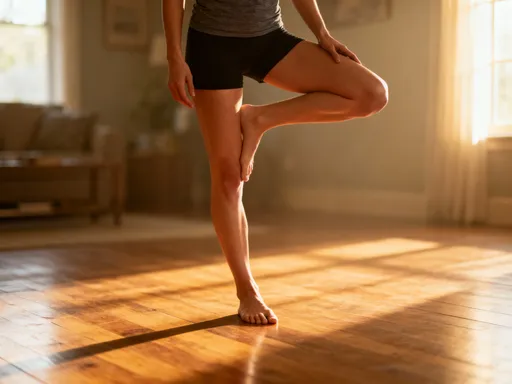
The best balance exercises are simple, require no equipment, and can be done anywhere. One of the most effective is the **single-leg stand**. Stand near a wall or sturdy chair for light support if needed. Lift one foot slightly off the ground and hold the position for 20 to 30 seconds. Focus on keeping the standing knee slightly bent, the core engaged, and the gaze forward. As stability improves, try closing the eyes or standing on a soft surface like a folded towel. This increases the demand on proprioception and vestibular control. Doing this twice daily builds foundational strength and awareness.
Another highly effective movement is the **heel-to-toe walk**, also known as the tandem gait test. Walk in a straight line, placing the heel of one foot directly in front of the toes of the other, as if walking on a tightrope. This narrow base of support challenges lateral stability and improves coordination between the lower limbs. Perform this for 10 to 15 steps, using a wall for light support if necessary. It’s especially useful for training dynamic balance—the kind needed when navigating crowded sidewalks or uneven paths.
The **clock reach** exercise adds a cognitive-motor element. Imagine standing in the center of a clock face. With one foot planted, reach the other leg out to different “times” — 12 o’clock (forward), 3 o’clock (side), 6 o’clock (back), and so on. This trains multidirectional control and strengthens the hip abductors and stabilizers. Start with small reaches and gradually increase range as balance improves. It’s a functional movement that mimics real-life actions like stepping sideways to avoid an object or reaching for something on the floor.
**Dynamic lunges** integrate balance with strength. Step forward into a lunge, lowering the back knee toward the floor while keeping the front knee aligned over the ankle. Push through the front heel to return to standing. This movement challenges stability in motion, requiring coordination between the legs and core. To increase difficulty, perform walking lunges or add a torso twist at the bottom of the lunge. These variations enhance neuromuscular control and prepare the body for unpredictable movements.
Finally, **wobble board drills** offer a progressive challenge. A simple foam pad or inflatable disc can simulate uneven surfaces. Stand on the device with both feet and gently rock side to side or front to back, maintaining control. As skill improves, try single-leg stands on the unstable surface. These tools amplify sensory feedback, forcing the body to make constant micro-adjustments. Even brief sessions—two minutes a day—can accelerate improvements in ankle stability and overall postural control.
Making Balance Training Stick
Consistency is the key to lasting change. The most effective way to build a habit is through **habit stacking**—linking a new behavior to an existing one. For example, practice standing on one leg while brushing your teeth, or do heel-to-toe walks during commercial breaks. These micro-sessions add up without requiring dedicated workout time. Over time, the brain begins to associate balance practice with daily routines, making it feel natural rather than burdensome.
Tracking progress can also boost motivation. Keep a simple journal or use a notes app to record how long you held a single-leg stand or how many steps you completed in a heel-to-toe walk. Small improvements—going from 15 to 25 seconds—may seem minor, but they reflect real neuromuscular gains. Celebrating these milestones reinforces commitment and builds confidence.
Environmental adjustments can further support balance development. Spending time barefoot at home, especially on varied surfaces like carpet, tile, or grass, increases sensory input from the feet and strengthens intrinsic foot muscles. Walking on uneven terrain during walks—like trails or grassy areas—naturally challenges stability in a low-risk way. Even simple changes, like standing while folding laundry or waiting for water to boil, create opportunities to engage the balance system throughout the day.
It’s important to approach balance training with patience. Unlike strength gains, which may be visible in muscle definition, balance improvements are often subtle at first. You might notice fewer stumbles, better posture in photos, or increased ease when stepping off curbs. These quiet victories are signs of progress. The goal isn’t perfection but gradual, sustainable improvement that supports lifelong mobility.
Beyond Stability: The Ripple Effects of Better Balance
Improving balance does more than prevent falls—it transforms how you move through the world. Greater stability fosters a sense of body confidence, reducing the subconscious fear of losing footing. This mental shift can be empowering, especially for those who have experienced near-falls or feel uneasy on stairs or slippery surfaces. With improved balance, daily life becomes less taxing and more fluid, allowing for greater participation in activities like gardening, dancing, or traveling to new destinations with varied terrain.
Secondary benefits extend to posture and spinal health. As balance improves, so does core engagement and alignment. Many people unknowingly slouch or shift weight unevenly, leading to lower back strain and shoulder tension. Balance training encourages symmetrical weight distribution and mindful posture, reducing chronic discomfort. Over time, this can lead to fewer aches, improved breathing, and a more upright, energetic presence.
Gait efficiency also improves. With better coordination between the legs and pelvis, walking becomes smoother and more economical. This means less fatigue during long walks and greater endurance in daily activities. For those managing weight or cardiovascular health, efficient movement supports overall physical activity levels, making it easier to stay active without overexertion.
Perhaps most importantly, balance training is an act of long-term self-care. It’s not about fixing a problem—it’s about building resilience. Just as we brush our teeth to prevent cavities, we can train our balance to preserve mobility and independence as we age. The habits formed today lay the foundation for a future where movement remains a source of joy, not limitation. By prioritizing balance, you’re not just standing taller—you’re living with greater confidence, control, and freedom.
While these methods are safe and science-backed, individuals with medical conditions should consult a healthcare provider before starting any new exercise routine.