How to Collect Coins Without Losing Money: A Pro’s Guide to Smart Investing
You’ve probably seen old coins selling for thousands online and thought, "Could I make money doing that?" I did too—until I learned the hard way that coin collecting isn’t just about owning rare pieces. Without proper knowledge, it’s easy to overpay, get fooled, or end up with a drawer full of worthless metal. This is not just a hobby; it’s an alternative investment that demands strategy, caution, and discipline. Let’s walk through how to protect your money while building a valuable collection.
The Hidden Risks Behind Coin Collecting
Coin collecting has long been romanticized as a pastime where history and profit meet. Many enter the world of numismatics with the hope of uncovering a forgotten treasure in a dusty attic or at a local flea market. The image is compelling: an ordinary person discovers a rare coin, takes it to an expert, and walks away with life-changing money. While such stories do exist, they are the exception, not the rule. The truth is that most coins—no matter how old or visually striking—are not valuable in the marketplace. The emotional appeal of holding a piece of history can easily cloud financial judgment, leading collectors to make purchases based on sentiment rather than sound investment principles.
One of the most common financial pitfalls is buying coins solely because they are old. Age alone does not guarantee value. A 19th-century penny may look impressive, but if millions were minted and many have survived in good condition, its market price will remain low. Similarly, coins with unique designs or foreign inscriptions often attract interest, but unless they are rare or in high demand among collectors, their resale value may disappoint. The market is flooded with coins that appear special but are, in fact, common. This misperception is frequently exploited by dealers who use persuasive language to inflate perceived worth, encouraging buyers to pay far more than a coin’s true market value.
Another significant risk is misunderstanding the grading system. Coin condition, or grade, plays a crucial role in determining value—often more than rarity itself. A coin in mint condition can be worth exponentially more than the same coin with even minor wear. However, grading is a specialized skill, and amateur collectors often overestimate the quality of what they own. Without formal training or third-party verification, it’s easy to believe a coin is in “excellent” condition when it is actually only average. This leads to overpayment and difficulty reselling at a profit. Emotional attachment further compounds the problem; once a collector has invested time and money into a piece, they may be unwilling to accept an objective assessment of its worth.
The absence of regulation in many parts of the coin market also increases risk. Unlike stocks or bonds, which are traded on transparent exchanges with real-time pricing, the collectible coin market operates largely through private transactions, auctions, and specialty dealers. Prices are not standardized, and the same coin can be listed at vastly different amounts depending on the seller. This lack of price transparency creates opportunities for overcharging, especially for inexperienced buyers. Additionally, the secondary market for rare coins can be illiquid, meaning it may take months or even years to find a buyer willing to pay top dollar. These factors make coin collecting a high-risk venture if approached without caution and research.
Understanding True Value: What Makes a Coin Worth Something?
To build a collection that holds or increases in value, it’s essential to understand the real drivers of a coin’s worth. Contrary to popular belief, rarity is only one piece of the puzzle. A coin may be rare, but if no one is actively seeking it, its market value will remain low. Conversely, some widely available coins can command high prices due to strong demand from collectors. The key factors that determine value are authenticity, condition, historical significance, mintage numbers, and current market trends. These elements work together to shape what a coin is truly worth—not what a seller claims it’s worth.
Authenticity is the foundation of value. A coin must be genuine to have any worth in the collector’s market. Unfortunately, counterfeits have existed for as long as coins themselves, and modern technology has made it easier to produce convincing fakes. Even experienced collectors can be deceived by high-quality replicas. This is why third-party grading services such as the Professional Coin Grading Service (PCGS) and Numismatic Guaranty Corporation (NGC) are so important. These organizations authenticate coins, assess their condition, and encapsulate them in tamper-proof holders with a certification label. A coin with a PCGS or NGC seal carries significantly more trust and, therefore, higher market value than one without certification.
Condition, or grade, is often the most decisive factor in valuation. The Sheldon Scale, which ranges from 1 to 70, is the standard grading system used in the United States. A coin graded 70 is in perfect, uncirculated condition, while a coin graded 1 shows heavy wear and damage. The difference between a grade of 64 and 66, which may appear negligible to the untrained eye, can result in a price difference of hundreds or even thousands of dollars. Tiny details—such as the presence of hairlines, toning, or surface luster—can dramatically affect a coin’s grade. This is why professional grading is not just helpful but often necessary for serious investors.
Historical significance also plays a role. Coins associated with major events, short-lived minting periods, or design errors tend to attract more attention. For example, the 1913 Liberty Head nickel is one of the most famous rare coins in American history, not because of its metal content, but because it was never officially released and only five are known to exist. Its story adds to its mystique and market demand. Similarly, coins from politically turbulent periods or those with minting anomalies—like double dies or off-center strikes—can become highly sought after. However, historical interest must be paired with verifiable scarcity and collector demand to translate into real value.
Mintage numbers, or the total quantity of a coin produced, provide a baseline for assessing rarity. A coin with a mintage of 10,000 is inherently rarer than one with a mintage of 1 million. But survival rate matters just as much. If most of those 10,000 coins were lost, melted, or damaged over time, the number available today may be extremely low. Conversely, high-mintage coins that were well-preserved—such as modern proof sets stored by collectors—may remain abundant in high grades, limiting their appreciation potential. Therefore, investors must look beyond initial production numbers and consider how many specimens are actually available in the current market.
Avoiding Overpayment: Pricing Transparency and Market Research
One of the most preventable yet common mistakes in coin collecting is overpaying. Unlike publicly traded assets, collectible coins do not have a centralized pricing mechanism. There is no live ticker showing the exact value of a 1909-S VDB penny or a 1932-D Washington quarter. Prices are influenced by dealer markup, auction results, collector demand, and geographic location, leading to wide discrepancies. A coin listed for $500 at one shop may be available for $350 elsewhere—or worth only $250 based on recent sales data. Without diligent research, buyers risk paying a premium for something that cannot be resold at a profit.
To avoid this, collectors must become skilled researchers. The first step is consulting reputable price guides, such as the Red Book (A Guide Book of United States Coins), which provides estimated retail values based on grade and mintage. While these figures are useful, they should be treated as starting points, not definitive prices. Retail values often reflect what dealers charge, not what a coin will actually sell for in the open market. A more accurate measure is realized auction data—actual prices paid in competitive bidding environments. Websites like Heritage Auctions and eBay’s completed listings offer insight into what buyers are truly willing to pay, allowing for more informed purchasing decisions.
Comparing prices across multiple dealers is another essential practice. Just as one would shop around for a car or appliance, coin buyers should evaluate offers from several sources. Reputable dealers typically charge a markup of 10% to 25% above wholesale value, but some may charge significantly more, especially for high-demand items. Online marketplaces can offer lower prices, but they also come with risks—such as unclear return policies or uncertified coins. When comparing listings, pay close attention to the coin’s grade, certification, and condition description. A coin listed as “MS-64” by one seller may be graded “MS-63” by a professional service, resulting in a meaningful difference in value.
Understanding the bid-ask spread is also critical. In the coin market, the bid price is what a dealer will pay to buy a coin from you, while the ask price is what they charge to sell it. The difference between these two—the spread—represents the dealer’s profit margin. For some coins, this gap can be 20% or more. A coin sold for $600 may only be worth $480 if you tried to sell it back the next day. This liquidity cost must be factored into any investment decision. Savvy collectors account for this spread by aiming to purchase below retail value, ensuring they have room for profit even after transaction costs.
Negotiation is another tool for avoiding overpayment. While some dealers post fixed prices, many are open to discussion, especially for high-ticket items or bulk purchases. Polite, informed buyers who reference recent auction results or competing offers often succeed in securing better deals. However, it’s equally important to know when to walk away. If a price seems too high, or if the seller refuses to provide certification or clear photos, it’s better to pass. Patience and discipline are far more valuable than impulse in building a profitable collection.
Counterfeit Coins and Fraud Prevention
Fraud is a persistent issue in the coin collecting world. From ancient Rome to the modern era, counterfeiters have sought to profit by replicating valuable coins. Today, advances in metallurgy and digital imaging have made it easier than ever to produce convincing fakes—some of which can pass initial inspection even by experienced collectors. The risk is not limited to rare, high-value coins; even common issues are counterfeited to deceive beginners. Falling victim to fraud can result in total loss of investment, making prevention a top priority for any serious collector.
Several red flags can help identify potentially counterfeit coins. One of the most obvious is price. If a coin is being offered at a fraction of its market value—such as a 1916-D Mercury dime for $100 when comparable specimens sell for $2,000—it should raise immediate suspicion. While bargains exist, extremely low prices are often too good to be true. Another warning sign is vague or incomplete descriptions. Legitimate sellers provide detailed information about a coin’s grade, certification, and provenance. Listings that use generic terms like “rare” or “valuable” without supporting evidence should be approached with caution.
Poor-quality photography is another red flag. Reputable dealers use high-resolution images that show both sides of the coin, including close-ups of key details. Blurry, poorly lit, or cropped photos may be hiding flaws—or the fact that the coin is not genuine. Always insist on clear, professional images before making a purchase. Additionally, be wary of sellers who avoid third-party certification. While some older collections contain uncertified coins, any new purchase should ideally be graded by PCGS, NGC, or another trusted service. Certification not only verifies authenticity but also provides an objective assessment of condition, reducing the risk of overpayment.
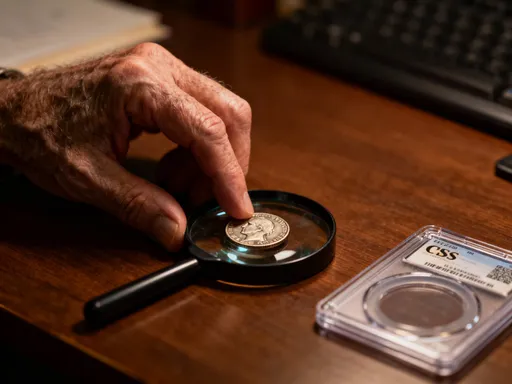
Buyers should also use basic verification tools. A simple digital scale can confirm whether a coin’s weight matches the specifications for its type and year. Significant deviations suggest a replica. Magnification tools, such as a 10x loupe, allow for closer inspection of details like reeding, lettering, and surface texture. Authentic coins have sharp, consistent features, while counterfeits may show casting seams, tool marks, or irregular metal flow. For high-value purchases, consider consulting a professional authenticator or submitting the coin for third-party review immediately after acquisition.
Real incidents of fraud underscore the importance of vigilance. In one well-documented case, a collector purchased a supposedly rare 1804 silver dollar online for $15,000, only to discover it was a modern reproduction after submitting it to NGC. The seller disappeared, and the transaction was irreversible. In another case, a batch of counterfeit Morgan dollars was distributed through a popular online forum, fooling dozens of buyers before the scam was uncovered. These stories highlight how easily trust can be exploited in unregulated markets. The best defense is a combination of skepticism, research, and reliance on certified sources.
Diversification and Portfolio Integration
Coin collecting can be a rewarding part of a broader investment strategy, but it should not dominate a financial portfolio. Like any alternative asset, it carries unique risks and should be treated as a supplemental holding rather than a primary wealth-building tool. The key to success is diversification—spreading investments across different asset classes to reduce exposure to any single risk. Just as one would not put all their savings into real estate or stocks, allocating too much capital to coins can leave an investor vulnerable to market fluctuations, illiquidity, and valuation errors.
It’s important to distinguish between two types of coin investments: bullion and numismatic coins. Bullion coins, such as American Gold Eagles or Canadian Maple Leafs, are valued primarily for their metal content. Their prices track the spot price of gold, silver, or platinum, making them more predictable and liquid than rare coins. Numismatic coins, on the other hand, derive their value from collector demand, historical significance, and condition. Their prices can fluctuate independently of metal markets and may appreciate over time, but they are also more speculative and harder to sell quickly.
A balanced approach involves allocating a small, fixed percentage of one’s investment portfolio to numismatic coins—typically no more than 5% to 10%. This allows for participation in the potential upside without jeopardizing financial stability. Within that allocation, investors can further diversify by era, country, or theme. For example, a collection might include early American coins, British crowns, and modern commemoratives, reducing dependence on any single market. This spreads risk and increases the chances of long-term appreciation.
Setting clear investment limits is also crucial. Decide in advance how much money to spend annually on acquisitions and stick to that budget. Avoid the temptation to chase high-profile coins or “once-in-a-lifetime” deals, which often lead to overpayment. Instead, focus on consistent, disciplined buying—acquiring well-graded, certified coins at fair prices over time. This approach mirrors dollar-cost averaging in stock investing and helps smooth out market volatility.
Finally, treat coin collecting as a long-term endeavor. Unlike day trading or speculative stocks, numismatic investments rarely produce quick returns. Gains are realized over years or decades, as rarity and demand increase. By integrating coins into a diversified portfolio with realistic expectations, investors can enjoy the historical and aesthetic rewards while minimizing financial risk.
Liquidity Challenges and Exit Strategies
One of the most overlooked aspects of coin investing is liquidity—the ability to convert assets into cash quickly and at fair market value. While a coin may be listed at a high appraisal price, that figure means nothing if there are no willing buyers. Unlike stocks, which can be sold instantly on an exchange, rare coins require time, effort, and often significant transaction costs to sell. This illiquidity can be a major drawback, especially in emergencies or when financial goals change.
The method of sale significantly impacts both speed and return. Selling to a private dealer is often the fastest option, but it usually results in the lowest price. Dealers need to make a profit, so they will offer a wholesale price—typically 20% to 30% below retail. Public auctions can yield higher returns, especially for rare or desirable pieces, but they involve fees (often 10% to 15% of the sale price), longer timelines, and no guarantee of a sale. Online marketplaces like eBay offer broader reach but require the seller to handle photography, descriptions, shipping, and customer service, with the added risk of non-paying bidders or disputes.
To maximize liquidity, collectors should plan their exit strategy from the beginning. Maintain detailed records of every purchase, including date, price, seller, and certification number. Store coins in original holders to preserve condition, as even minor handling can affect grade and value. Stay informed about market trends and collector demand—knowing when interest in a particular series is rising can help time a sale for maximum return.
Timing also matters. The numismatic market experiences cycles, with certain periods of heightened activity—such as holiday seasons or major coin shows—when buyer interest peaks. Selling during these windows can improve the chances of a quick, profitable transaction. Conversely, trying to sell during a market downturn or in a niche category with limited demand may result in long wait times or forced discounts.
The goal is not just to build a valuable collection, but to ensure that value can be realized when needed. A well-planned exit strategy protects against loss and ensures that years of careful collecting translate into tangible financial benefit.
Building a Sustainable, Low-Risk Collection
True success in coin investing is not measured by the most expensive or flashy acquisition, but by consistent, informed decision-making over time. The most profitable collectors are not those who get lucky with a single find, but those who apply discipline, research, and patience across hundreds of small choices. Building a sustainable, low-risk collection requires a shift in mindset—from viewing coins as curiosities to treating them as financial assets. This means prioritizing certified, high-potential coins, avoiding emotional purchases, and continuously expanding one’s knowledge.
A practical framework begins with starting small. Focus on affordable series with strong growth potential, such as early Lincoln cents, Mercury dimes, or Washington quarters in certified mint state grades. These coins have deep collector bases, ample market data, and proven appreciation over time. By acquiring multiple specimens at reasonable prices, investors can build equity gradually while minimizing exposure to volatility.
Education is equally important. Read books, attend coin shows, join numismatic clubs, and follow reputable market reports. The more knowledge one gains, the better equipped they are to spot overpriced listings, identify undervalued opportunities, and avoid fraud. Staying emotionally detached from purchases is another key habit. Just because a coin has personal significance—such as being from one’s birth year—does not make it a good investment. Sentiment has no place in financial decision-making.
Finally, maintain a long-term perspective. Wealth in coin collecting is not created overnight. It comes from steady accumulation, careful preservation, and strategic selling. By focusing on authenticity, condition, and market demand—and by avoiding the traps of hype, nostalgia, and overpayment—collectors can build portfolios that are not only personally satisfying but financially sound. In the end, the most valuable asset is not the coins themselves, but the wisdom and discipline used to acquire them.